
Evergreen Reference
Complete Sauna Temperature Guide by Health Goal
The permanent SŌLACE reference for sauna temperature protocols by health goal. Last reviewed against current literature: May 2026.
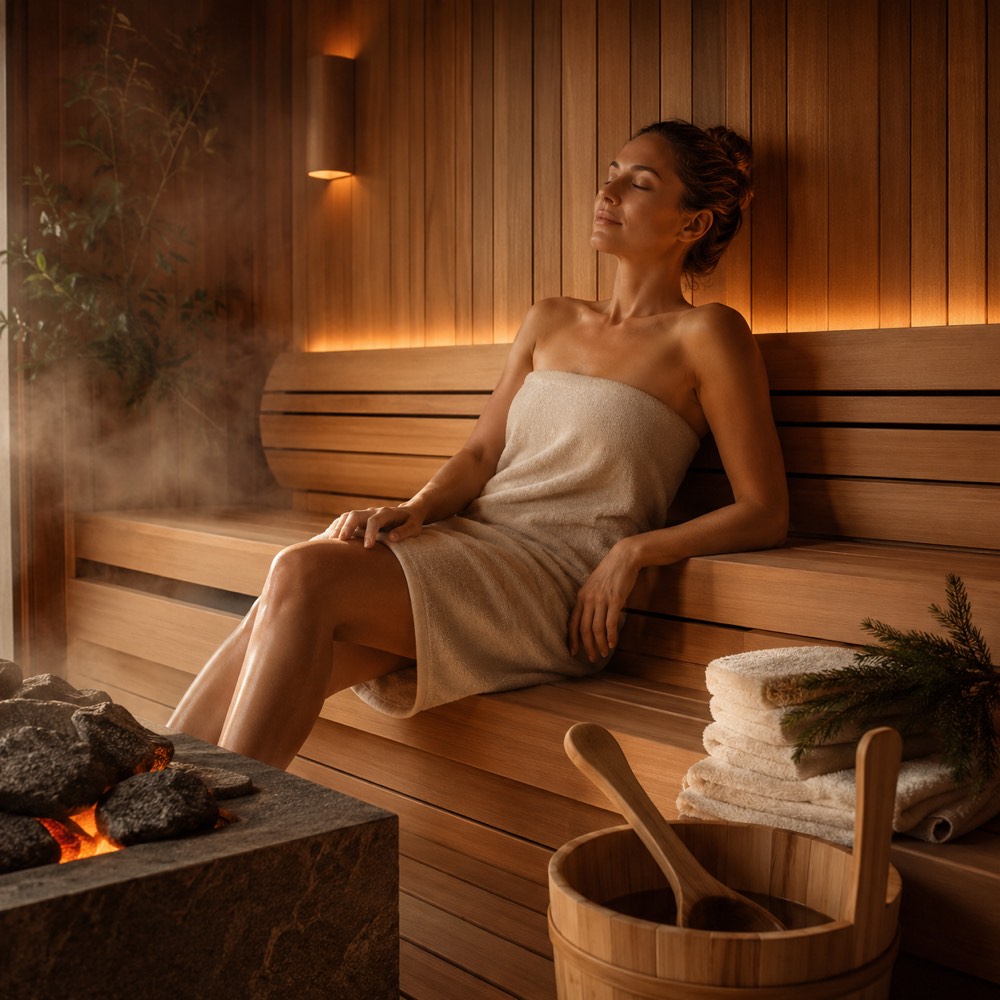
This is the definitive SŌLACE reference page for sauna temperature protocols organized by health goal. Bookmark it. Return to it when you need a specific answer.
Sauna temperature is not a single variable to optimize in isolation. The therapeutic effect of a session comes from the interaction of temperature, duration, frequency, sauna type, and the human using it.
How To Use This Guide
Use the master table for quick direction, then read the section for your goal before choosing a protocol. Traditional Finnish sauna temperatures below refer to ambient air temperature. Infrared temperatures refer to cabinet air temperature, with the important caveat that radiant heating feels and behaves differently from ambient heat.
The Master Reference Table
| Health goal | Sauna type | Temperature | Duration | Frequency |
|---|---|---|---|---|
| Cardiovascular health | Traditional Finnish | 176-212°F (80-100°C) | 15-20 min per round | 4-7x weekly |
| Athletic recovery | Traditional preferred | 176-194°F (80-90°C) | 20-30 min | 3-5x weekly |
| Athletic performance | Traditional Finnish | 176-212°F (80-100°C) | 20-30 min post-workout | 3-4x weekly |
| Hypertrophy support | Traditional Finnish | 176-194°F (80-90°C) | 30 min, 2+ hours post-lift | 3-4x weekly |
| Stress reduction | Traditional or infrared | 150-175°F traditional / 120-150°F infrared | 15-25 min | 3-7x weekly |
| Sleep improvement | Traditional preferred | 158-176°F (70-80°C) | 20-30 min, 2+ hours before bed | 3-5x weekly |
| Chronic pain | Far infrared | 122-140°F (50-60°C) | 20-30 min | 3-5x weekly |
| Longevity / healthspan | Traditional Finnish | 176-212°F (80-100°C) | 20 min, 2-3 rounds | 4-7x weekly |
| Skin health | Near / full-spectrum infrared | 120-140°F (49-60°C) | 20-30 min | 3-4x weekly |
| Contrast therapy | Traditional + cold plunge | 176-194°F sauna / 50-59°F plunge | 15 heat / 2-3 cold / 5 rest | 5-6x weekly |
Protocols By Health Goal
Cardiovascular Health
Temperature: 176-212°F (80-100°C)
Sauna type: Traditional Finnish sauna
Duration: 15-20 minutes per round, 1-3 rounds
Frequency: 4-7 sessions per week
Evidence level: Strong observational evidence; strongest data comes from Finnish sauna cohorts.
High-temperature Finnish sauna produces a cardiovascular load that resembles moderate aerobic work: heart rate rises, blood vessels dilate, and cardiac output increases. Long-running Finnish population studies associate frequent sauna bathing with lower cardiovascular and all-cause mortality risk. The dose relationship matters: four to seven weekly sessions is the range most often associated with the strongest outcomes.
Athletic Recovery
Temperature: 176-194°F (80-90°C)
Sauna type: Traditional preferred; infrared can support gentler recovery
Duration: 20-30 minutes
Frequency: 3-5 sessions per week
Evidence level: Strong for endurance and soreness recovery; timing caveats around cold immersion after lifting.
Heat exposure can increase blood flow, support heat shock protein activity, and help athletes downshift after training. Use sauna after cardio, sport, or endurance work freely. If the session includes cold immersion and your goal is hypertrophy, keep the cold portion at least a few hours away from heavy lifting.
Athletic Performance
Temperature: 176-212°F (80-100°C)
Sauna type: Traditional Finnish sauna
Duration: 20-30 minutes after training
Frequency: 3-4 sessions per week for at least 3 weeks
Evidence level: Moderate-to-strong for heat acclimation and endurance adaptation.
Post-exercise sauna can support heat acclimation and plasma-volume expansion, a key adaptation for endurance performance. This is a long-game protocol: the benefit comes from repeated heat stress layered onto training, not one heroic session.
Muscle Growth / Hypertrophy Support
Temperature: 176-194°F (80-90°C)
Sauna type: Traditional Finnish sauna
Duration: Around 30 minutes
Frequency: 3-4 sessions per week
Evidence level: Moderate; growth-hormone response exists, but timing matters.
Short, intense heat exposure can elevate endocrine markers involved in recovery. The practical rule is simple: do not place aggressive cold immersion immediately after heavy strength training when muscle growth is the priority. Sauna is best scheduled later in the day, after the post-lift anabolic window has begun.
Relaxation and Stress Reduction
Temperature: 150-175°F traditional / 120-150°F infrared
Sauna type: Traditional or infrared
Duration: 15-25 minutes
Frequency: 3-7 sessions per week
Evidence level: Strong for subjective relaxation and nervous-system downshifting.
This goal does not require maximal heat. Lower-intensity sessions are often better because they can be repeated without becoming another stressor. The target state is not conquest. It is parasympathetic return.
Sleep Improvement
Temperature: 158-176°F (70-80°C)
Sauna type: Traditional preferred
Duration: 20-30 minutes
Frequency: 3-5 sessions per week
Evidence level: Moderate-to-strong; thermoregulation mechanism is well established.
Sauna raises core temperature. The post-sauna cooling curve can reinforce the body's natural sleep-onset signal. Finish the session at least 90-120 minutes before bed, take a cool shower, and keep the bedroom cool.
Chronic Pain and Inflammation
Temperature: 122-140°F (50-60°C)
Sauna type: Far infrared
Duration: 20-30 minutes
Frequency: 3-5 sessions per week
Evidence level: Moderate; strongest for specific chronic pain and inflammatory conditions.
Infrared earns its place here. Lower cabinet temperatures and radiant tissue warming can be easier to tolerate than high ambient heat. For chronic conditions, consistency over four to six weeks matters more than intensity.
Detoxification Support
Temperature: 158-176°F traditional / 130-140°F infrared
Sauna type: Traditional or infrared
Duration: 20-30 minutes
Frequency: 3-5 sessions per week
Evidence level: Moderate for sweat-mediated excretion; broad detox claims are often overstated.
Sweat can carry trace quantities of certain heavy metals and environmental compounds. Sauna does not replace the liver or kidneys, and it does not magically detoxify the body. Treat this as sweat-supported excretion, not a cure-all.
Cognitive Function and Mood
Temperature: 176-212°F (80-100°C)
Sauna type: Traditional Finnish sauna
Duration: 15-20 minutes per round
Frequency: 3-7 sessions per week
Evidence level: Moderate for cognitive protection; strong for acute mood effects.
High heat can produce endorphin-mediated calm and may support cerebrovascular and inflammatory pathways tied to long-term brain health. For sharper alertness, combine sauna with cold exposure as contrast therapy.
Longevity / Healthspan
Temperature: 176-212°F (80-100°C)
Sauna type: Traditional Finnish sauna
Duration: 20 minutes, 2-3 rounds
Frequency: 4-7 sessions per week
Evidence level: Strong observational evidence; mechanisms are plausible and increasingly studied.
Longevity is the protocol with the clearest argument for frequency. The likely mechanism is hormesis: repeated mild stress produces adaptation. Heat shock proteins, vascular conditioning, and nervous-system recovery all matter. The boring variable wins: repeat it for years.
Skin Health
Temperature: 120-140°F (49-60°C)
Sauna type: Near or full-spectrum infrared
Duration: 20-30 minutes
Frequency: 3-4 sessions per week
Evidence level: Early-stage; mechanisms are plausible, large sauna-specific trials are limited.
Infrared and increased circulation can support skin warmth, sweating, and post-session glow. Shower after the session, then moisturize while skin is still warm. Do not let sweat dry on the skin and call it skincare.
Beginner / Acclimatization
Temperature: 130-158°F (54-70°C)
Sauna type: Traditional or infrared
Duration: 8-12 minutes
Frequency: 3-4 sessions per week
Evidence level: Based on heat-acclimation principles.
First-time users should earn intensity slowly. Start lower, exit before dizziness or nausea, and add time before adding temperature. The goal is to build a practice, not to survive an ordeal.
Contrast Therapy
Temperature: 176-194°F sauna / 50-59°F cold plunge
Sauna type: Traditional sauna plus cold plunge
Duration: 15 heat / 2-3 cold / 5 rest, repeated 2-3 rounds
Frequency: Daily or 5-6 sessions per week when tolerated
Evidence level: Strong mechanisms; protocol precision is still evolving.
Heat dilates. Cold constricts. Rest lets the nervous system integrate. Keep transitions simple and close: sauna, plunge, quiet rest. End on cold for morning alertness, heat for evening softness.
Sauna Type Comparison
| Variable | Traditional Finnish | Infrared |
|---|---|---|
| Temperature range | 176-212°F (80-100°C) | 120-150°F (49-65°C); premium models can reach higher |
| Heating mechanism | Ambient air heated by stones | Radiant infrared light absorbed by the body |
| Best evidence base | Cardiovascular health, longevity, athletic performance | Chronic pain, relaxation, gentle therapy |
| Outdoor use | Yes, with cedar or thermally modified wood | No, electronics need climate control |
| Installation | Often needs 240V electrical | Many models use standard 120V power |
Temperature Safety Reference
| Situation | Guidance |
|---|---|
| Exit immediately if | Dizziness, nausea, feeling faint, chest pain, difficult breathing, or uncomfortable heart pounding |
| Alcohol | Do not use sauna while drinking or intoxicated; thermoregulation and judgment are impaired |
| Hydration | Drink before and after; add electrolytes after longer or hotter sessions |
| Pregnancy | Ask a physician; high-temperature sauna is generally avoided, especially early pregnancy |
| Cardiovascular conditions | Ask a physician; start lower and shorter only if cleared |
| Medication | Review heat tolerance with a clinician if using diuretics, antihypertensives, sedatives, or similar drugs |
Frequently Asked Questions
What temperature should a sauna be for maximum health benefits?
For cardiovascular health, longevity, and cognitive-protection goals, the best-studied range is traditional Finnish sauna at 176-212°F. For relaxation, pain, sleep, and skin goals, lower temperatures can be more appropriate.
Is hotter always better?
No. Hotter is more useful for some goals and worse for others. The correct temperature is the one that fits the outcome, the sauna type, and your tolerance.
Can I use a sauna every day?
Healthy adults often tolerate daily sauna well, and frequent use is where the strongest observational outcomes appear. Hydration, cooling, and personal contraindications still matter.
Products For Every Protocol
For high-temperature Finnish protocols, start with the SaunaLife ERGO E7 outdoor barrel sauna. Pair it with a HUUM DROP 9kW heater when you want strong stone mass, WiFi control, and consistent heat across multiple rounds.
For indoor traditional heat, choose the SaunaLife XPERIENCE X6 indoor sauna. For infrared protocols, the Finnmark FD-2 Full Spectrum has the highest infrared temperature ceiling in the catalog, while the Finnmark FD-4 Hybrid Trinity adds steam capability on 120V power.
For contrast therapy, pair a sauna with the Dundalk Baltic Cold Plunge.
Browse the complete sauna and cold plunge collection.
Related reference: complete sauna wood types guide.
Sources and Further Reading
- Clinical Effects of Regular Dry Sauna Bathing
- Finnish sauna cohort study on cardiovascular outcomes
- Post-exercise sauna bathing and endurance performance
- Sauna, shower, and ice-water endocrine responses
- Infrared sauna study in chronic inflammatory conditions
- Cold water immersion and catecholamine response
- Cold water immersion and resistance-training adaptation
SŌLACE Ritual is an independent thermal wellness resource. We may earn a commission when you purchase through links on our site at no additional cost to you. This page is updated as new research is published and is intended for informational purposes only. Consult a qualified healthcare provider before beginning any new sauna protocol, particularly if you have existing health conditions.