
Comparison Guide
Traditional vs. Infrared Sauna: What Nobody Tells You
Every comparison article picks a side. This one does not. Here is what actually matters after months of living with the choice.
If you have researched home saunas, you already know the standard comparison. Traditional saunas get hotter. Infrared saunas heat faster. Traditional usually needs 240V power. Infrared often plugs into the wall. Traditional gives you steam. Infrared warms the body directly.
All of that is true. None of it is enough.
The question is how the choice plays out over time: what daily use feels like, what the research actually supports, which technology fits specific goals, and where both fall short in ways marketing pages rarely mention.
The Fundamental Difference
A traditional Finnish sauna heats the air to roughly 170°F-195°F using an electric heater or wood-burning stove loaded with stones. Your body absorbs heat from the environment. The heat load is ambient, total, and intense.
An infrared sauna uses panels that emit radiant energy absorbed directly by the body. The room temperature is lower, usually 120°F-150°F, though premium full-spectrum models can climb higher. You sweat at a lower ambient temperature.
Ambient heat versus radiant heat is the root of nearly every meaningful difference: research evidence, session feel, installation requirements, cardiovascular load, and which type belongs in your actual life.
What The Research Actually Says
The traditional evidence is deeper
The strongest body of sauna health research comes from Finnish-style sauna studies using high-temperature dry heat. A large Finnish cohort associated frequent sauna bathing with lower cardiovascular mortality, and a broad clinical review summarized evidence around cardiovascular function, blood pressure, heat shock proteins, and neurological markers.
The important caveat: those most-cited cardiovascular and longevity findings are mostly traditional sauna data. If your primary goal is to follow the best-established research base, traditional sauna has the clearer evidence.
The infrared evidence is real, but younger
Infrared research is not fake. It is simply narrower. Studies have explored infrared sauna use for chronic pain, rheumatoid arthritis, fatigue-related conditions, and some cardiovascular markers. The work is promising, but it is not yet the same scale or duration as the Finnish traditional sauna literature.
Practically: choose traditional when you want the strongest evidence for high-heat cardiovascular stimulus. Choose infrared when you need gentler heat, installation simplicity, or direct tissue warming for comfort and recovery.
The Five Things Nobody Tells You
1. The temperature gap is bigger than it sounds
The difference between 185°F ambient air and 140°F ambient air is not a minor preference. At 185°F, every breath is warm. The heat is total. Your cardiovascular system is working. Fifteen minutes feels earned.
At 140°F, the experience is gentler. You can read, breathe easily, and stay longer. Neither is universally better, but they do not feel like versions of the same thing.
2. The infrared penetration claim needs context
Infrared marketing often says the light penetrates beneath the skin. That is directionally true, but the claim is often overstated. Traditional sauna also warms muscle tissue as core temperature rises. The difference is the route, not the destination.
Infrared's direct tissue warming matters most for joint pain, soreness, and connective tissue comfort. For general cardiovascular sauna bathing, total heat load and consistency matter more.
3. Consistency matters more than the technology
The Finnish research shows a dose relationship: more frequent sauna use was associated with stronger outcomes. Whatever sauna you will actually use four to seven times a week is the better sauna for you.
Do not buy the theoretically superior option you use twice a week. Buy the accessible option you return to without resistance.
4. Installation reality changes everything
Most infrared saunas plug into 120V power. You can be using one within hours of assembly. Traditional saunas usually need a licensed electrician, a 240V circuit, permits, and more scheduling.
That does not make traditional the wrong choice. It simply makes it a project. Go in with that expectation and you will not resent the process.
5. Premium infrared closes part of the gap
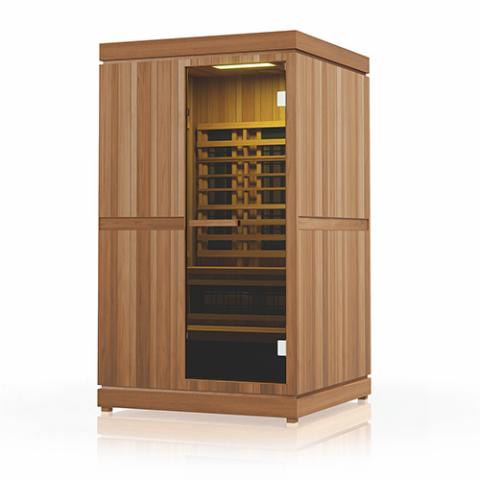
The critique that infrared does not get hot enough is fair for many models that top out around 135°F. It is less fair for the Finnmark FD-2 Full Spectrum, which is built to reach 170°F.
The difference between 135°F infrared and 170°F infrared is enormous. The FD-2 sits closer to traditional sauna territory than most infrared cabins on the market.
Head-To-Head: Where Each Type Wins
Traditional wins on established evidence
The long-running Finnish data applies most directly to traditional sauna use. If you are making the decision primarily on documented cardiovascular outcomes, traditional is the more evidence-backed choice.
Traditional wins on intensity and ritual
A true traditional sauna reaches higher temperatures and gives you löyly: water over hot stones, steam rising through the room, heat landing on the skin. Infrared panels do not replicate that.
Traditional wins on outdoor durability
Cedar and thermally modified spruce barrels such as the SaunaLife ERGO E7 and Dundalk Harmony are designed to live outside for years. Infrared electronics are not.
Infrared wins on accessibility
Plug-in power, fast heat-up, gentler air temperature, and lower installation friction matter. For condos, rentals, spare bedrooms, and heat-sensitive users, infrared may be the reason a sauna practice happens at all.
Infrared wins for specific comfort goals
For chronic pain, joint stiffness, and gentler recovery sessions, infrared's lower ambient temperature and direct radiant warmth can be easier to tolerate and easier to repeat.
Hybrid wins when you refuse to choose
The Finnmark FD-4 Hybrid Trinity combines infrared panels, a Harvia stone heater with steam capability, and red light therapy in one 120V cabin. It is the rare model that treats the debate as optional.
The Comparison Table
| Factor | Traditional Sauna | Infrared Sauna |
|---|---|---|
| Temperature range | 170°F-195°F | 120°F-170°F; most run 130°F-150°F |
| Heat-up time | 30-45 minutes | 15-20 minutes |
| Power requirement | 240V dedicated circuit | 120V standard outlet for most models |
| Electrician required | Yes | Usually no |
| Session length | 10-20 minutes per round | 30-45 minutes |
| Steam capability | Yes, water over stones | No, except true hybrid systems |
| Research evidence depth | Extensive; decades of Finnish data | Growing; promising but younger |
| Outdoor use | Yes, with cedar or thermo-modified wood | No; electronics need protection |
| Heat-sensitive users | More challenging | Better suited |
| Cardiovascular stimulus | High | Moderate; higher with premium high-heat infrared |
| Long-term durability | 20-30+ years with quality builds | 10-20 years, technology dependent |
| Best for | Finnish ritual and maximum heat load | Accessibility, convenience, gentler therapy |
Our Product Recommendations By Goal
If you want maximum heat and the authentic experience
Start with the SaunaLife ERGO E7 Outdoor Barrel. It uses 1.65-inch thermally modified Nordic spruce, includes a shingle roof kit, and carries a limited lifetime warranty. Pair it with a HUUM DROP 9kW heater for maximum presence and WiFi control, or a Harvia Spirit 6kW for a cleaner budget.
For indoor traditional heat, the SaunaLife XPERIENCE X6 Indoor Traditional brings glass-front design and lifetime-grade materials into a spare bedroom or basement.
If you want convenience, accessibility, or gentler heat
Choose the Finnmark FD-2 Full Spectrum. It is the infrared model we recommend first because it reaches 170°F and carries unusually strong warranty coverage.
If you genuinely want both
Choose the Finnmark FD-4 Hybrid Trinity. Infrared, steam, and red light therapy in one cabin, powered by a standard 120V outlet.
The Honest Verdict
Anyone who says traditional is always better than infrared, or infrared is always better than traditional, is skipping the person in the room. The right answer depends on your home, your body, your heat tolerance, your goals, and your schedule.
The research is clearer on traditional sauna for cardiovascular and longevity-related outcomes. But four sessions a week in an infrared sauna you actually use beats two sessions a week in a traditional sauna you avoid because it is inconvenient.
The technology debate is secondary. The habit is everything.
Explore indoor saunas, traditional barrel saunas, and sauna heaters at SŌLACE Ritual.
Frequently Asked Questions
Which type of sauna is better for weight loss?
Neither type produces meaningful fat loss on its own. The weight lost during a session is mostly water and returns when you rehydrate. The meaningful benefits are cardiovascular support, recovery, heat tolerance, and stress reduction.
Can I use an infrared sauna if I have a heart condition?
Ask your physician before beginning any sauna practice with a diagnosed cardiovascular condition. Infrared is generally gentler because the ambient temperature is lower, but heat exposure still affects the cardiovascular system.
Is infrared radiation safe?
Far infrared is non-ionizing radiant heat. It is not UV or X-ray radiation. EMF output varies by product, so buyers who care about EMF should ask for model-specific testing.
How long does it take to see results?
Many regular users notice sleep and recovery changes within two to four weeks. Deeper cardiovascular adaptations require consistent use over months and years.
Can I convert infrared to traditional, or traditional to infrared?
Not practically. The cabin design, ventilation, heat source, and power requirements are different. Buy the type you want from the start, or choose a purpose-built hybrid.
Research Notes
- Clinical review of dry sauna bathing and cardiovascular, blood pressure, and wellness markers
- Finnish cohort study on sauna frequency and cardiovascular mortality
- Infrared sauna study in rheumatoid arthritis and ankylosing spondylitis patients
For temperature ranges by goal, see the complete sauna temperature guide. For material selection, see the complete sauna wood types guide.
SŌLACE Ritual is an independent thermal wellness resource. We may earn a commission when you purchase through links on our site at no additional cost to you. All product recommendations are based on our own research and evaluation. Research citations are provided for informational purposes and do not constitute medical advice. Consult your physician before beginning any sauna practice.